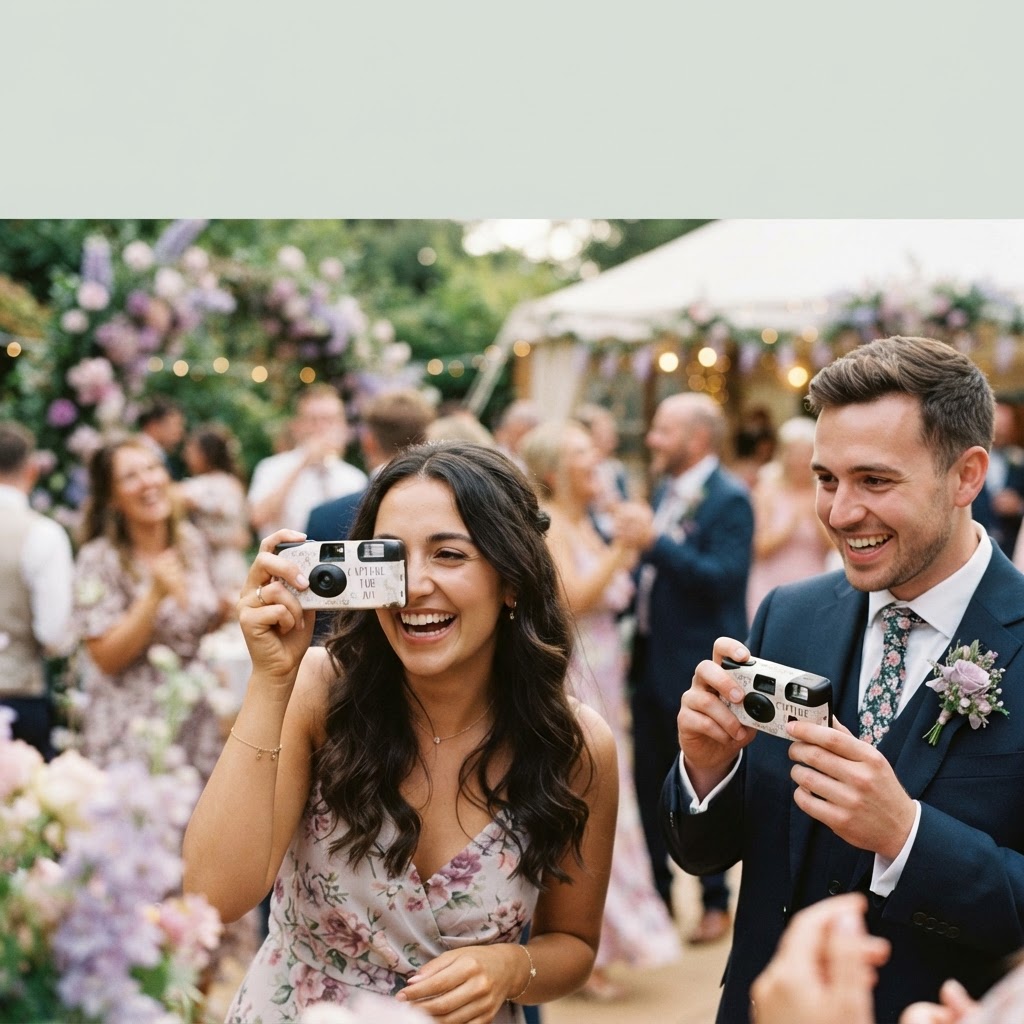
Disposable Cameras for a Wedding: UK Prices and Specs
Disposable cameras for a wedding cost £10-£25. Compare exposures and retailers, plus a £39 QR-code alternative with unlimited photos.
Key takeaways
- Plan on one disposable camera per 5-8 wedding guests, so a 100-guest wedding needs roughly 15-20 cameras.
- Budget £10-£25 per camera plus £10-£15 per camera for developing and scans, often £300+ total for a 100-guest wedding.
- Built-in flashes only reach about 2-4 metres, so evening reception shots frequently come back dark or blurry.
- White wedding cameras cost more for the printed shell only; the film, flash and lens match standard models.
- Moment49 offers a one-time £39 QR-code gallery with unlimited guest photo uploads and no app download.
Disposable cameras for a wedding cost roughly £10-£25 each in the UK, give 27-39 exposures, and you'll want about one per 5-8 guests, so a 100-guest reception typically means £150-£400 of film plus developing fees. This guide compares flash range, photo count and retailers across white and standard models, then checks where a one-time £39 QR-code alternative beats film on cost per usable photo.
How many disposable cameras do you need per wedding guest?
The one-camera-per-8-guests rule of thumb
A safe starting point is one camera per 8 to 10 guests, so a 100-guest wedding means roughly 10 to 12 cameras. UK multipack pricing works out cheaper per camera the more you buy, and current listings show packs with 27 exposures and built-in flash in the £5 to £10 per camera range on Amazon UK's disposable camera listings. If you want guests to shoot freely rather than ration frames, budget closer to one per 6 guests.
Daytime vs evening coverage
Cameras without flash only earn their keep in daylight, so assign most of them to daytime coverage. Evening receptions need flash cameras on every table. Alternatively, a QR-code option like Moment49 removes the count problem entirely: guests use their own phones, so there is no per-table stock to size.
What should you look for in the best disposable cameras for a wedding?
Exposures and film speed
Exposures are the number of shots on the roll, and most cameras give you 27 or 39. Work on roughly one camera per five to eight guests, then add one spare per table, because guests burn through frames fast on the first flash photo. Film speed matters more than most couples expect: ISO 400 is the standard, and anything lower will struggle indoors. ISO 800 film handles dimmer rooms, but fewer cameras carry it.
Flash range and battery
Flash range is the honest weak point. Most built-in flashes reach about two to four metres, so a camera left on a table captures the table, not the dance floor. Batteries are fixed inside, so if the flash dies partway through the night, the remaining frames are wasted. Buy cameras with a fresh manufacture date, because old film and tired batteries are the most common reason a roll comes back half-blank.
Table cards and instructions
A camera on a table with no card is a camera nobody picks up. Look for packs that include printed table cards telling guests to flash, get close, and wind on after each shot. If you would rather skip film entirely, a QR-code option like Moment49 lets guests scan and upload phone photos with no app download, shown as a live slideshow and downloadable afterwards for a one-time per-event price (https://moment49.com/Pricing).
Are white wedding disposable cameras worth the premium?
What the white shell actually costs you
White wedding cameras typically cost more per unit than standard models because you are paying for the printed design, not better optics. Inside, the film, flash and lens are usually identical to the plain version. The real hidden cost is development: a UK lab such as Boots Photo charges per roll to process and scan, and that fee applies whether the shell was white or black (Boots Photo film processing). If you buy 10 decorated cameras, expect the premium to be a small but real addition to your table budget.
When plain models make more sense
If your tables already have styled décor, plain cameras disappear into the setting and cost less. And if your priority is simply seeing the photos, a QR-code option like Moment49 skips film and developing entirely, with settings you control at https://moment49.com/Settings.
Where can you buy cheap disposable cameras for a wedding in the UK?
High-street and online UK stockists
Most couples buy from three places: high-street chemists, online photography retailers, and eBay or Amazon multipacks. Boots and WHSmith usually stock single cameras at full retail, which is the most expensive route per camera. Online specialists and eBay sellers undercut the high street, but check the expiry date on film before ordering, as cheap stock is often old.
Bulk and multipack pricing
Multipacks of 5 or 10 cameras bring the per-camera price down, and most UK sellers price wedding bundles this way. Buy one camera per 5-6 guests as a working rule, so a 100-guest wedding means 15-20 cameras. Even at bulk rates, you are paying for 27 exposures per camera, and film degrades in dim reception lighting, so expect a share of shots to come back dark or blank.
If that maths stings, a QR-code option like Moment49 charges £39 once per event and lets guests scan and upload unlimited photos from the phones already in their pockets, with no app download. Every upload is checked before it appears in your gallery (https://moment49.com/Moderation), so nothing unwanted reaches the live slideshow.
Disposable camera spec and cost comparison
Most wedding disposable cameras sit in the same spec band: 27 exposures, ISO 800 film, and a fixed-focus lens with a flash that reaches roughly 1-4 metres. That flash range is the number that matters most, because anything beyond about 3 metres in a dim reception room comes back dark or grainy. Kodak's own product information for its single-use cameras confirms the fixed-focus, built-in-flash design (Kodak).
Here is how the typical options compare. Prices are illustrative; check current UK listings before you buy, as they move with film costs.
| Camera type | Exposures | Flash range | Typical price each | Where to buy |
|---|---|---|---|---|
| White wedding camera (custom shell) | 27 | ~3 m | £12-£18 | UK wedding supplies shops |
| Standard black disposable | 27 | ~3 m | £8-£14 | High street chemists, Amazon |
| Reusable film camera + film | 24-36 | ~3 m | £30+ upfront | Camera shops |
| Moment49 QR code gallery | Unlimited | Phone flash | £39 per event | moment49.com |
The film cameras share one real weakness: 27 shots per table, no preview, and development fees on top. Moment49 costs £39 once, takes unlimited guest photos through a QR code with no app download, and shows them live. Where it falls short: it depends on guests' phones and venue wifi, and it will not produce the physical camera-on-the-table novelty some couples want.
Do wedding disposable cameras work in low light and evening receptions?
Poorly, in most cases. A disposable camera's flash is built for subjects a few metres away, so it struggles in the dim, spread-out rooms where evening receptions happen.
What flash actually reaches
Most built-in flashes on disposable cameras are rated for roughly 2-4 metres. Anything beyond that stays dark, so dance floor shots from the side of the room come back underexposed. Moving subjects add motion blur, because the shutter needs a longer exposure once the flash gives up. Expect a handful of keepers per camera from the evening, mostly close-up portraits.
Why phone cameras handle receptions better
Modern phones use computational tricks (multi-frame merging and night modes) to brighten dim shots automatically, and they focus fast. Guests already have them, which is why a QR-code gallery like Moment49 collects far more usable evening photos than a camera table, at £39 for the whole event.
How do you set up a disposable camera table at a wedding?
Put one camera per table rather than piling them all in one spot, so guests grab one during dinner when the flash actually matters. A simple sign ("Take photos, leave the camera on the table") does more than instructions nobody reads. Assign a friend to collect cameras before guests leave, because film left in a coat pocket is film you never see.
Placement and signage
Keep cameras away from the bar and the dance floor until evening, or half your 27 exposures go to blurry drinks shots. One A5 sign per table with a marker pen works better than a printed card.
Getting film developed afterwards
Budget roughly £10-£15 per camera for developing and scans, and drop them all at a lab together. If you would rather skip that step, a QR-code option like Moment49 lets guests scan and upload photos for a one-time £39 per event, with a 7-day window for guests to add their shots afterwards.
How much should you budget for wedding disposable cameras?
Work backwards from roughly one camera per five to six guests. For a 100-guest wedding, that is 16-20 cameras at £10-£20 each, so £160-£400 before developing. Add film processing at around £10-£15 per camera and you are often north of £300 total for maybe 700 shots, of which a fair share will be dark, blurry or of the floor.
The hidden cost: developing and wasted shots
The sticker price is never the whole bill. Developing fees, postage to and from the lab, and the wait of one to two weeks all add up. Then there are the duds: flash range of a few metres means evening reception shots frequently come back blank or washed out. Budget for a third of the photos being unusable and your cost per good photo climbs fast.
The digital alternative: Moment49 at £39 one-time
Moment49 charges £39 per event, one-time. Guests scan a QR code, upload photos and video messages with no app download or account, and you watch a live slideshow during the reception, then keep the gallery. Where it falls short: it depends on guests' phone cameras and decent venue lighting, so it will not match the charm of a physical camera on the table, and signal-poor venues can slow uploads. But at £39 flat, your cost per usable candid is hard to beat.
FAQ
Can you still get disposable cameras developed in the UK, and how much does it cost?
Yes. High-street labs like Boots Photo still process colour film, and independent mail-order labs do too. Expect roughly £10-£15 per camera for developing and scans, so a batch of 15 cameras adds £150-£225 on top of what you paid for the cameras themselves.
How long does it take to get wedding disposable camera photos developed?
Most UK labs take one to two weeks, longer if you post cameras and wait for return postage. Dropping them at a local chemist with an in-store service is usually faster. Ask for scans as well as prints, since scans are far easier to share with guests afterwards.
Do guests actually use disposable cameras at weddings?
Usually yes, especially early in the evening when tables are still seated. Usage drops once people are dancing, partly because the flash only reaches a few metres. Guests also burn frames quickly on the first shot, so expect a fair share of dark, blurry or accidental photos per roll.
Can I put my wedding photos on a live slideshow without an app?
Yes. A QR-code service like Moment49 lets guests scan a code and upload phone photos and video messages with no app download or account. Uploads appear in a live slideshow during the reception, and the gallery stays viewable afterwards for a one-time £39 per event.