How do I collect wedding guest photos in real time?
Real-time wedding photo collection is the process of using a web-based platform to gather images and videos from your guests instantly via a single scanned QR code. Instead of waiting for friends to email files or share links after the event, these systems host a central gallery that updates the moment a guest uploads a file through their smartphone browser. This approach eliminates the friction of creating shared drives or chasing people for content weeks later. It functions by routing guest device uploads directly to a private, temporary digital space accessible to the couple. Because the process is browser-based, guests do not need to install an app or register an account to contribute their images.
Where should I place wedding QR codes for best results?
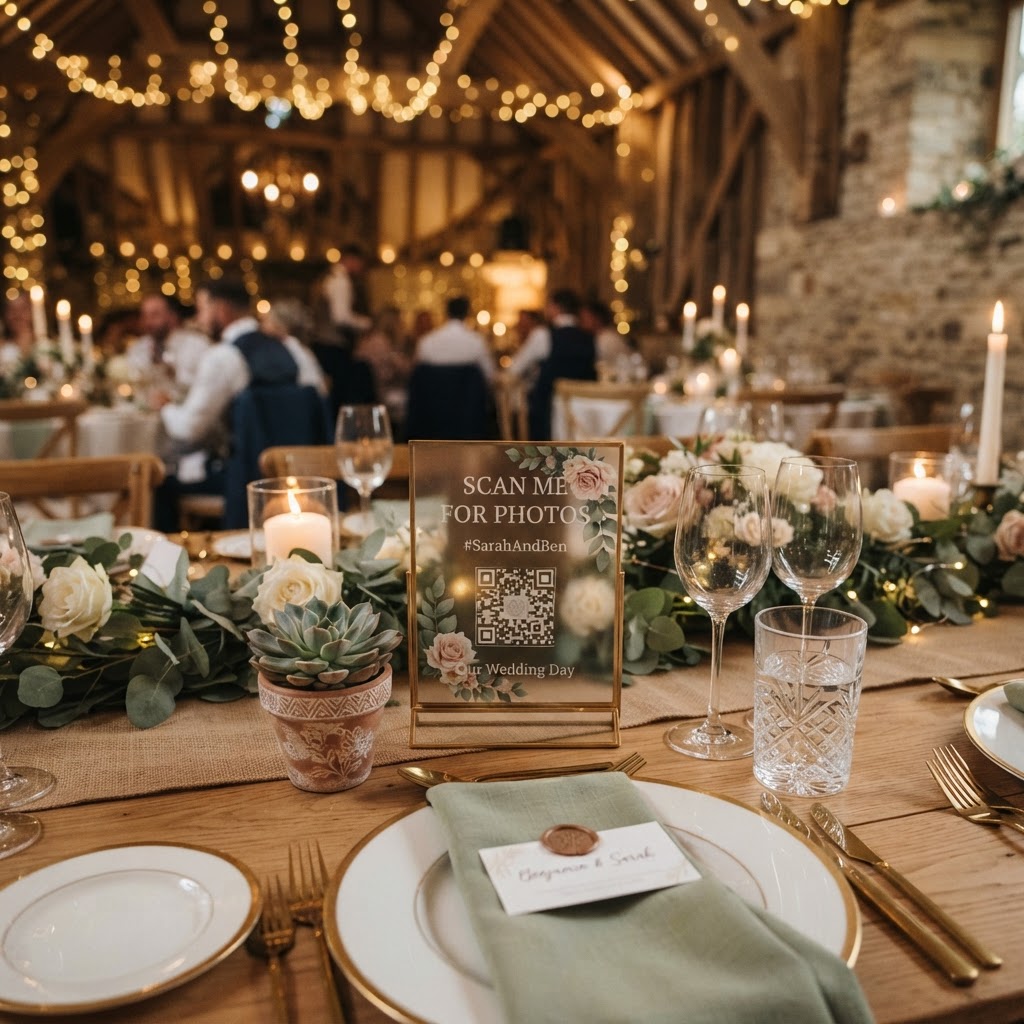
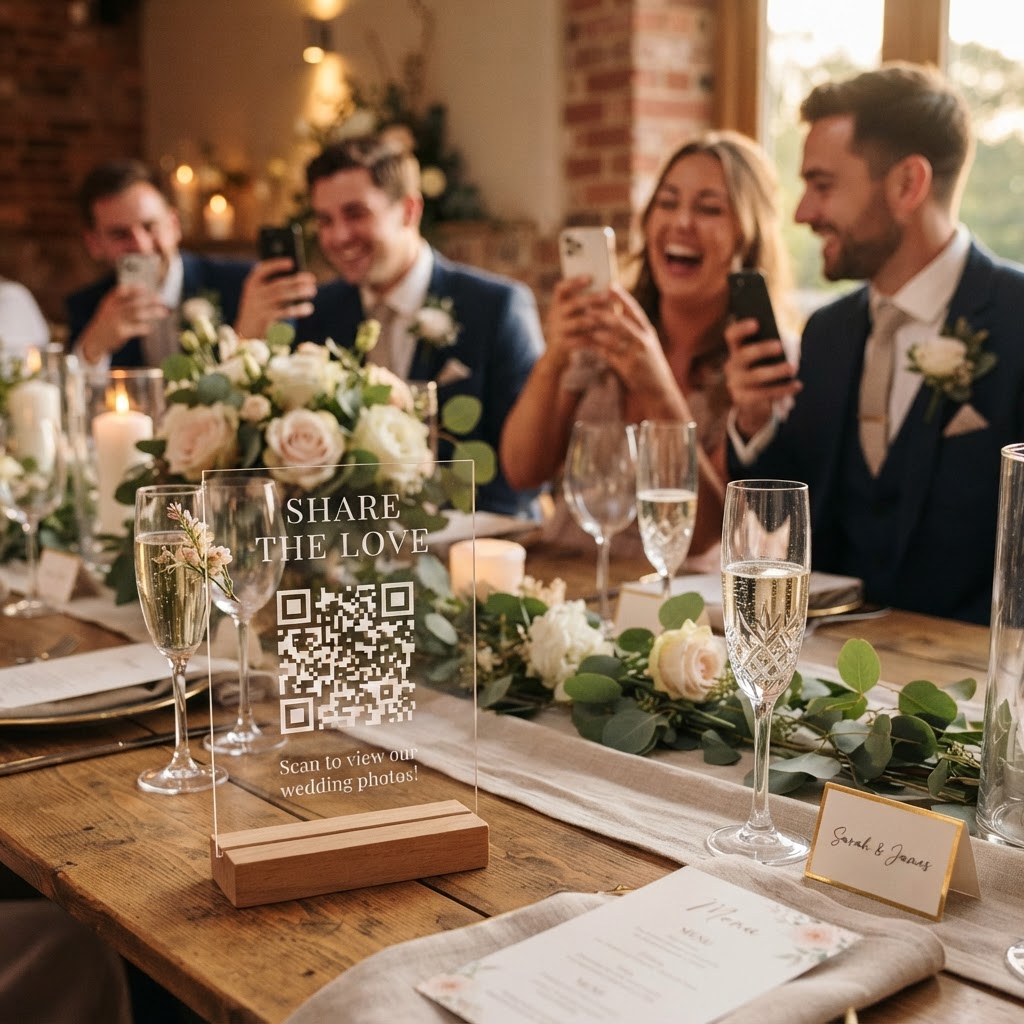
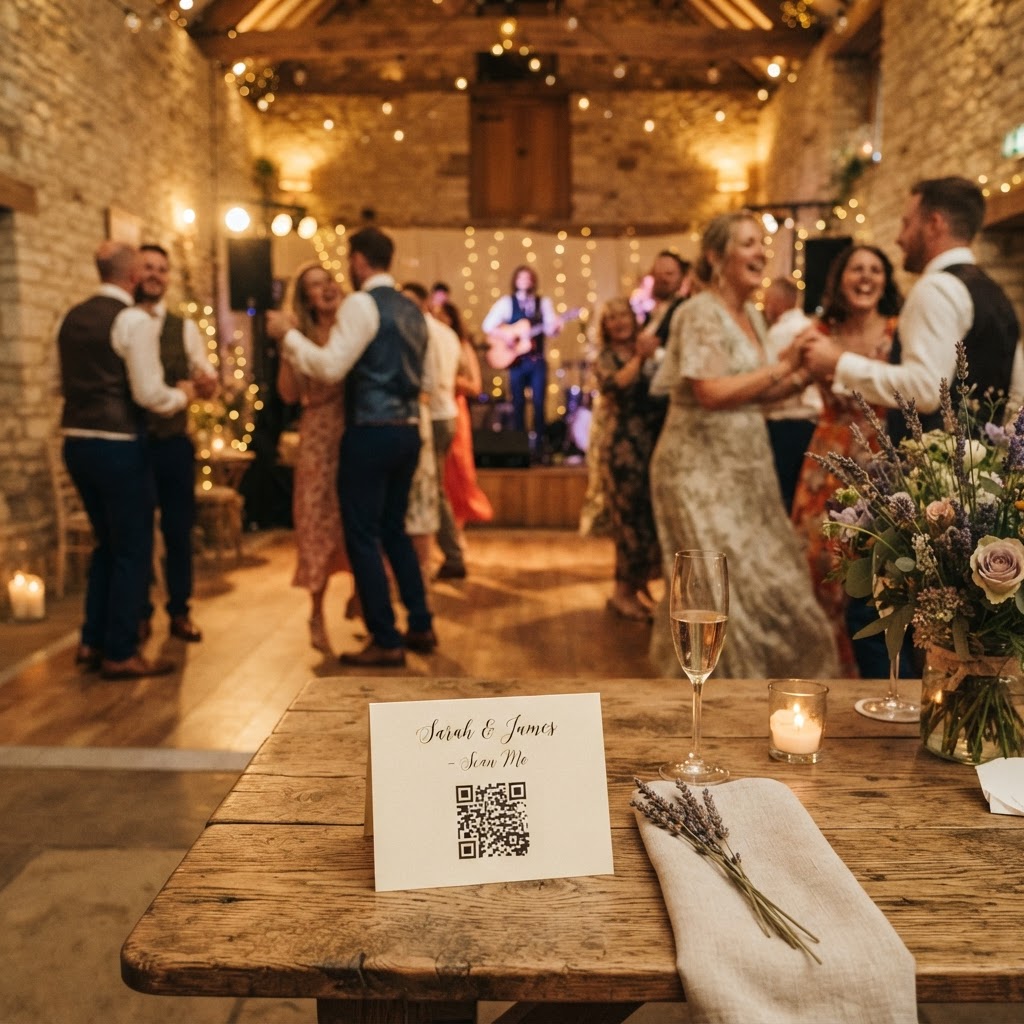
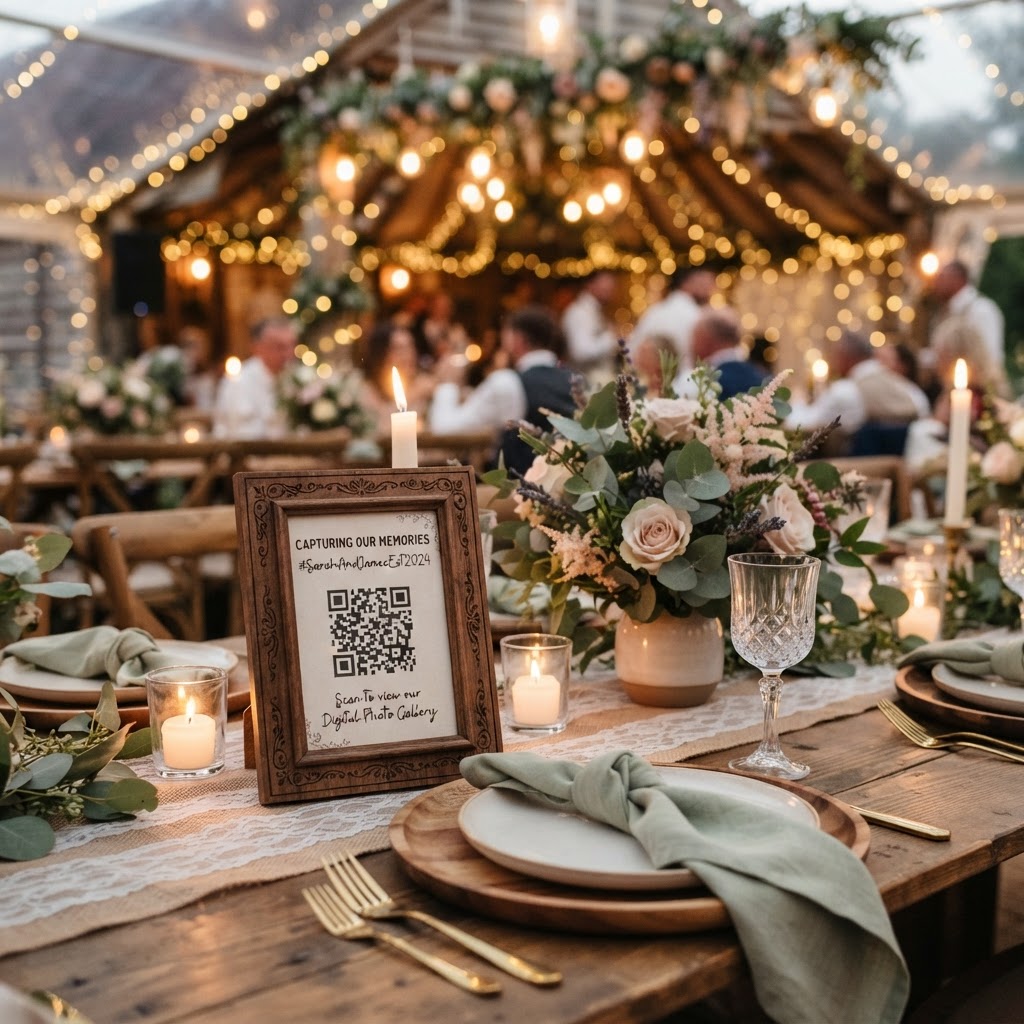
You should place QR codes in areas where guests spend their time waiting or socialising to encourage participation. If you bury the code in a welcome pack or an obscure corner, your engagement numbers will reflect that lack of visibility. Place physical signs on every dining table to catch guests while they are eating or chatting. Position a larger, high-contrast sign at the bar, as this is a natural gathering point where people look for something to do with their hands. Consider including a small, polite prompt on the back of your order of service or menu card. If your venue has a screen, projecting the code during the transitions between meal courses is another effective way to remind guests that they can contribute photos. Ensure the codes are printed in a high-resolution format so that even older smartphone cameras can scan them instantly from a distance of a few feet.
How to ensure guests actually upload their photos
The success of your photo collection relies on making the upload process appear effortless and rewarding. If you merely set up the system and hope for the best, you will likely receive only a handful of submissions. Start by mentioning the photo sharing initiative during your welcome speech or asking your MC to make a brief announcement. Use specific prompts that guide guests toward the kind of content you want. Suggesting that they capture candid shots during speeches or funny moments on the dance floor provides a clear objective for the guests. People are far more likely to engage when they feel like they are contributing to a shared project rather than just performing a technical task. When guests see their own photos appearing in a live slideshow on a venue screen, the immediate feedback loop encourages them to keep uploading throughout the evening. This live display element turns the act of sharing into an interactive form of wedding entertainment.
What are the technical limitations and privacy rules?
While using an automated system, you must remain aware of the operational constraints of these services. Most systems, including Moment49, function on a fixed-event basis, usually costing around £39 for a single wedding day without recurring subscriptions. Because these services are designed for temporary event sharing, they are not intended to serve as a permanent cloud backup or a long-term digital archive for your wedding photography. Guest uploads typically remain open for seven days following the event date to allow people time to upload images after the excitement settles. Following that period, the system enters a final phase, and the gallery is usually deleted from the server 90 days after the event. You must ensure that you download all your collected photos and videos to your own computer or hard drive well before this deadline. Relying on the temporary gallery as your only copy of these memories is a significant risk. Treat these systems as a way to gather raw, candid content, and move everything to your personal storage as soon as you receive the link to your curated album. Privacy remains a key feature, as these galleries are private spaces that you control. Unlike posting photos to public social media platforms where algorithms determine visibility, a dedicated wedding gallery keeps your content in one secure place. You choose who receives the link to view the images, which provides a level of comfort for guests who may be hesitant to have their photos shared on open internet platforms.
Why this method beats manual collection
The traditional method of gathering photos involves creating WhatsApp groups or shared cloud folders, both of which suffer from high levels of human friction. In a group chat, images are often compressed into low-resolution files, and the feed becomes cluttered with messages that have nothing to do with the wedding. Uploading to a cloud drive requires the guest to navigate through several permissions, often forcing them to download an app or log into an account they do not use. This mental barrier is often enough to stop guests from contributing entirely. When you use a streamlined QR system, the entire flow is reduced to a scan, a tap, and an upload. You bypass the digital bureaucracy that usually leads to lost photos and frustrated guests. By removing the need for software installation, you cater to every guest regardless of their technical proficiency or phone brand. You receive high-resolution files that represent the full scope of your wedding day as seen by your guests, including those awkward dance floor angles and candid moments that your professional photographer might miss due to their focus on the formal timeline. This real-time strategy captures the energy of the event while it is happening, ensuring you have a digital record to look at while you wait for your official professional wedding photos to be edited and delivered.